Contribution of Sustainable Fisheries to the Blue Economy of the Eastern Africa, Southern Africa and the Indian Ocean region – ECOFISH programme
Enhancing Sustainable Fisheries and Blue Economy Governance
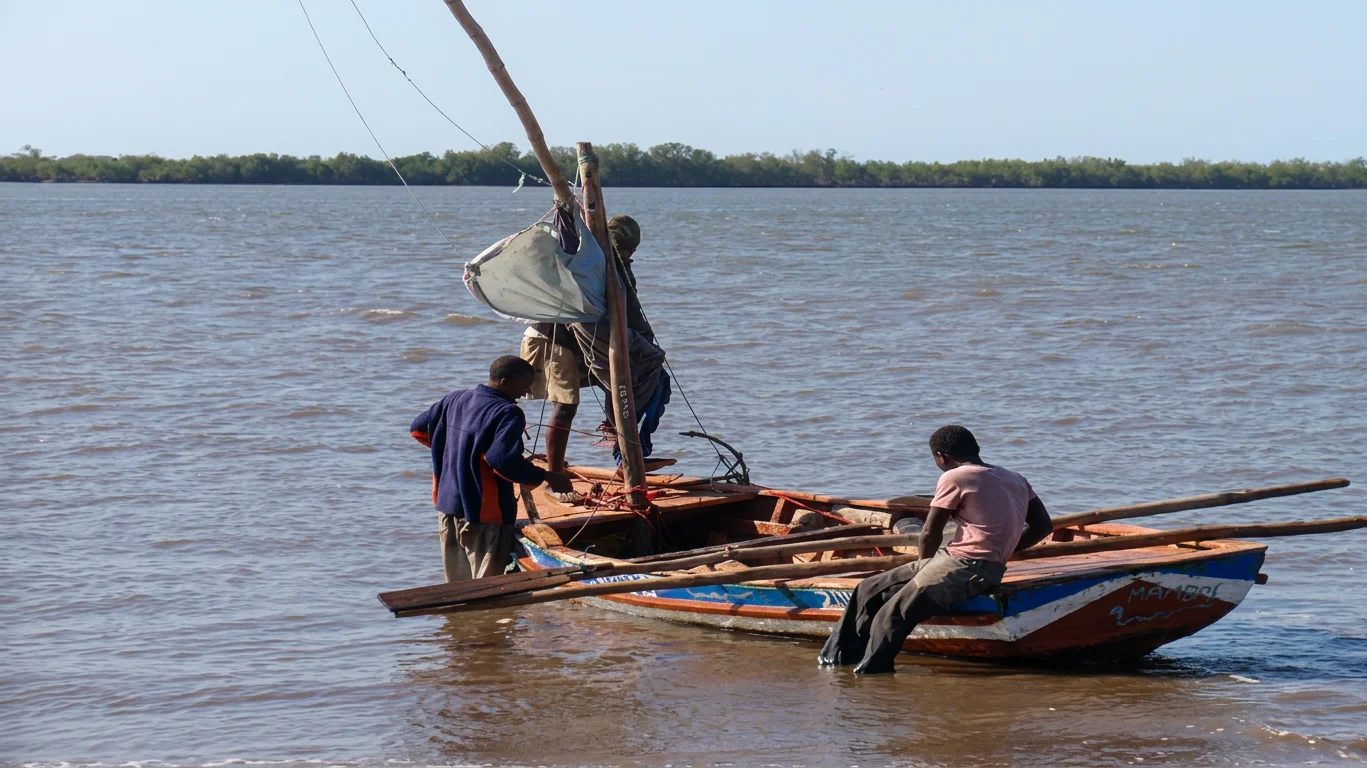
Challenge
The ECOFISH program addresses the systemic vulnerabilies within the fisheries sector of the Eastern and Southern Africa-Indian Ocean (ESA-IO) region, where the reliance on marine and inland fisheries for food security, livelihoods, and economic growth is severely undermined by persistent challenges. The sector suffers from widespread illegal, unreported, and unregulated fishing, as well as fragmented governance frameworks and overlapping institutional mandates which hinder effective management and enforcement. Compounding these structural issues are the impacts of overfishing, unethical harvesting practices, and the prevalence of poorly regulated open-access systems. All of these are further exacerbated by intensifying environmental externalities which threaten the long-term socio-ecological sustainability of these aquatic ecosystems as well as the communities that depend on them.
Approach
The program employs an integrated regional architecture designed to transform fisheries management from fragmented and project-based interventions to a cohesive and institutionally anchored system. A three-tiered model is used which combines high-level strategic steering, decentralized delivery through existing Regional Economic Communities and Fisheries Bodies, and community-level implementation via national focus points. This ensures that regional policies are well grounded in local realities. Its core objectives focus on modernizing policy frameworks and demonstrating sustainable small-scale fisheries practices that enhance food security and economic resilience.
To reach these goals, the program combines policy reform, technical capacity-building, and cross-border enforcement. Some key activities include the development of harmonized frameworks, such as the Regional Fisheries Charter for Lake Tanganyika, and the operationalization of cooperative MCS through joint regional patrols and upgraded vessel monitoring techniques. By pivoting innovative financing and climate-resilient measures, the project has institutionalized regional cooperation, creating a lasting blueprint for sustainable Blue Economy development.
Goal and Results
- Enhanced policy, institutional, and governance frameworks, with a particular emphasis on small-scale fisheries (SSF)
- Strengthened Monitoring, Control, and Surveillance (MCS) capacities, primarily anchored in the IOC Regional Fisheries Surveillance Plan (PRSP)
- Implementation of demonstration projects showcasing sustainable and inclusive inland and marine small-scale fisheries in local communities