Feed the Future Uganda Institutional and Systems Strengthening Activity
Strengthening Institutions and Agricultural Market Systems
Challenge
Employing 68% of the population, the Ugandan agriculture sector had the potential to be a key growth engine. Although dominated by older-generation smallholder farmers, it was also a potential source of jobs for youth, as 84% of the population were living in rural areas. Uganda’s National Development Plans had brought about some improvements in agriculture sector governance, with some reforms focusing on public financial management initiatives and modern management practices. But weak relationships (caused by lack of transparency and trust in the marketplace, and lack of information) still constrained organizations within the agricultural system and limited their capacity. Key Ministries, Departments and Agencies and Industry Apex Organizations that were critical to driving improvements in Uganda’s agricultural sector needed support to tackle their capacity-related challenges.
Approach
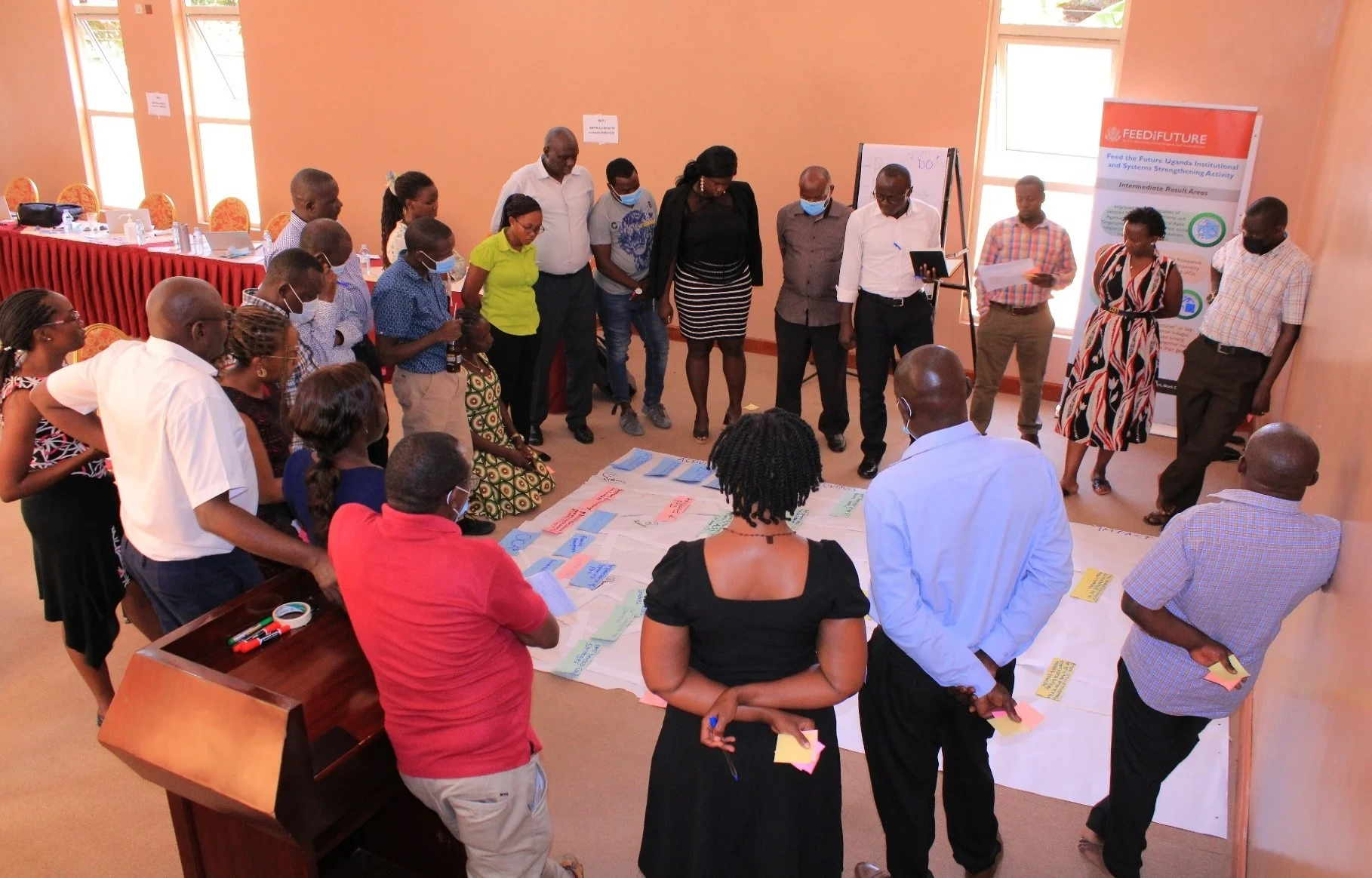
The Feed the Future Uganda Institutional and Systems Strengthening (ISS) Activity sought to build capacity and strengthen the processes of Ugandan government organizations that were vital to driving agriculture-led economic growth. The Activity helped these entities to improve internal processes and strengthen structures critical for sectoral coordination to enable them to better fulfill their mandates.
ISS improved the policy framework supporting the functionality of these institutions and strengthened their internal processes, making them more responsive to the needs of their consumers, members, and the public. To strengthen local ownership and innovation, ISS empowered stakeholders to work together to mitigate market constraints. ISS also focused on opportunities to engaged untapped resources. ISS promoted sustainability by incorporating key tenets: host country ownership, a focus on evidence-based results with real and measurable impact on development, harnessing the role of the private sector in development, and maximizing transparency and accountability.
Goals and Results
- Used field research and studies to identify ways to streamline and enhance internal processes, making organizations more efficient and effective.
- Engaged in public-private dialogue that built consensus between stakeholders and empowered organizations to strengthen their own governance.
- Improved the enabling environment through formulation, implementation, and alignment of policies and frameworks such as Uganda’s National Agriculture Extension Strategy and National Grain Trade Policy.
- Conducted institutional and organizational capacity assessments to design action plans for training and capacity building.
- Assisted the Uganda Investment Authority (UIA) to develop the National SME Portal–a central marketplace for Ugandan businesses, service providers, and support programs. The Portal facilitated creation of over 4,300 jobs; more than 260 businesses were profiled to access investment services; 17 used the portal to market their products and services.
- Supported public awareness campaigns to improve public understanding of agricultural practices and trends, and to incentivize farmers to grow higher-quality produce that met export quality requirements.