From assessing climate vulnerabilities in remote Solomon Island communities to improving infrastructure and renewable energy projects in the Cook Islands, the Climate Finance Capacity Support Programme (CFCSP) – funded by New Zealand’s Ministry of Foreign Affairs and Trade and implemented by DT Global – is supporting Pacific governments on Pacific-led climate action.
The CFCSP works with 15 Pacific countries to scale up delivery of their climate change priorities through increasing their access to personnel and other support that can assist them to plan, access, deliver and report on climate finance.
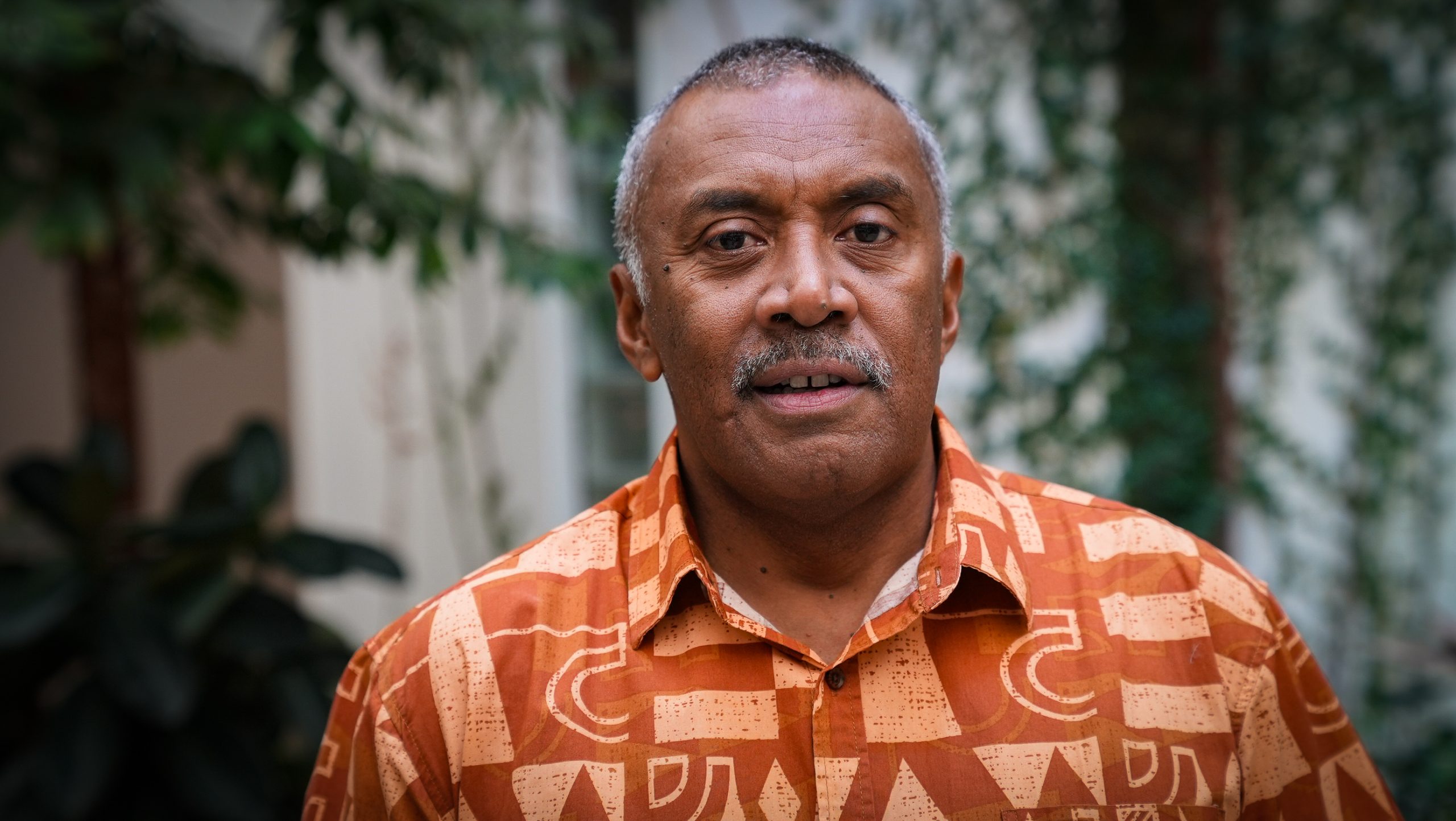
In this Q&A, Team Leader for the Climate Finance Capacity Support Programme, Noa Seru, reflects on how the CFCSP Implementation Team supports Pacific countries to accelerate their climate priorities.
How does the CFCSP work with Pacific governments?
The kind of support we provide ranges from embedded individuals to fill human resourcing gaps, to firms or individual consultants with specific technical expertise that not always available locally.
Can you provide an example of what CFCSP support looks like in practice?
This includes support, like what we have done for the Cook Islands, where we brought in an engineering firm to do an assessment of their health facilities across the Cook Islands and make recommendations on how to improve these building structures to ensure they are more climate resilient. We have also provided people for government positions, such as in the Solomon Islands and Vanuatu, where we recruited several personnel who are now embedded within government, filling roles that the governments are not currently able to resource due to financial or other constraints.
How would you describe the types of support that Pacific governments are prioritising when it comes to climate action?
A recent analysis of CFCSP support provided throughout 2025 highlighted that Pacific governments are accessing the programme strategically. They are looking to address systems gaps so that they can deliver on their climate action priorities, rather than only seeking support for short-term technical activities.
They are seeking support to strengthen planning coordination, financial management, reporting and governance systems. They are also seeking to build staff capacity through access to technical expertise and analytical capability and promote institutional learning. Finally, by seeking support for embedded roles, governments can maintain momentum when it comes to delivering on national climate action priorities.
How does the CFCSP identify personnel to support 15 countries?
As of January 2026, we were supporting more than 50 capacity support requests across the Pacific, and to meet this demand we need to be strategic and clear in our approach.
When we seek to find individuals or firms to deliver on our partners’ requests, our priority is to look within the country and identify and draw on local capacity, local technical expertise. Our thinking with this is local consultants ‘know best’ and are often better placed to navigate culture and context within the country. By doing so, we are also providing career opportunities for what is a growing cadre of Pacific-based climate experts.
We have officers who have been recruited locally for national positions in Fiji, the Solomon Islands and Papua New Guinea, for example. We also have Pacific Islanders deployed to other countries, for example we have a Fijian working in Samoa. It is a good spread of how we engage our technical assistance.
What is the value of looking locally to fill roles?
I am a big advocate for localisation – that is why we look within the country first to find local expertise and fill capacity gaps – because when local capacity is strengthened, those countries then have individuals with the technical skills to continue the work and interventions that are either supported or started with CFCSP support. This leads to the continuity or sustainability of our interventions.
What does the Implementation Team look like and do?
The Implementation Team listens to the countries and partners to help them identify their needs for accelerated climate action. We have Implementation Leads, who support Pacific governments to identify and shape the capacity support they need; our Capacity Support Officers, who support the Implementation Team with strategic planning and the implementation of the programme; and monitoring and evaluation and communications teams to track and report on programme performance. The CFCSP is supported by a partnership of 3 consulting entities – DT Global, Third Way Forward and Allen & Clarke – and our team operates from our Suva headquarters, New Zealand and Australia, and share their own technical expertise across the Pacific to support our Pacific partner countries.
---
With a final year of implementation ahead, the CFCSP is focused on sustained delivery and scaling impact to support Pacific governments and their climate action priorities.
For more on the work with the Climate Finance Capacity Support Programme, please visit https://www.cfcsp.org.nz/